
The Complete Guide to Growing Authentic Karungali (Indian Ebony Tree) at Home: Cultural Significance, Potting & Care

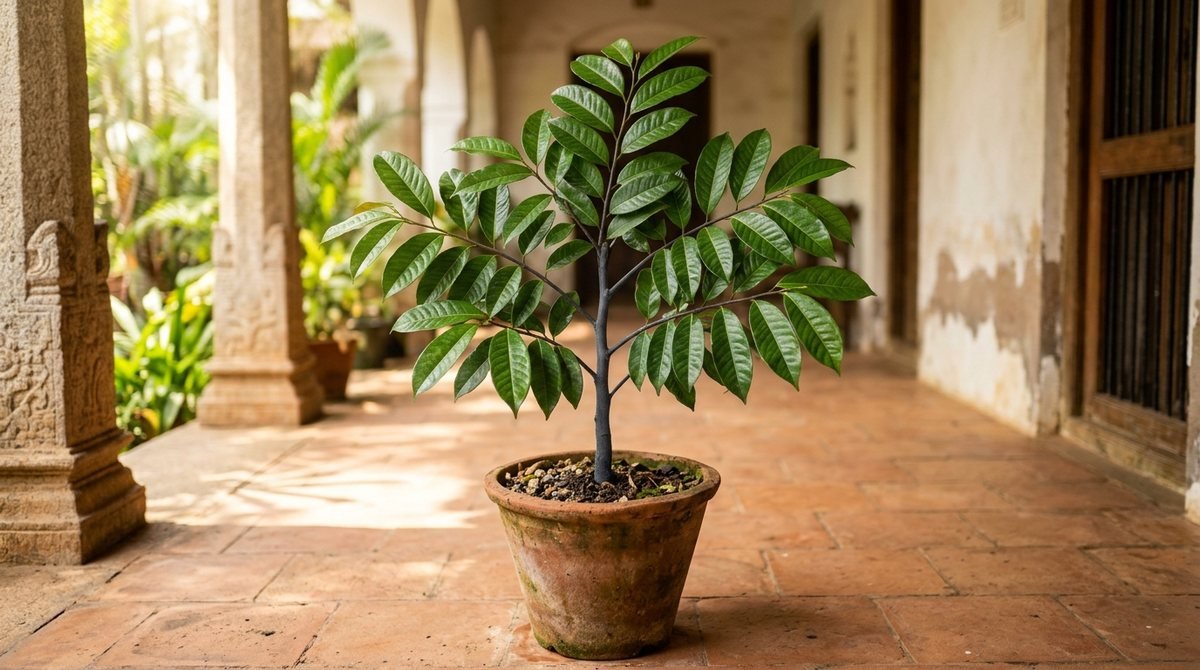
Growing Karungali tree at home has captured the imagination of plant lovers, spiritual seekers, and traditional home gardeners across India. Scientifically classified as Diospyros ebenum and universally renowned as the Indian Ebony tree, this legendary botanical treasure represents one of the densest, most revered hardwood species on the planet. Historically celebrated in ancient Tamil literature and classical temple traditions, Karungali is deeply cherished for its spiritual resonance, grounding energies, and striking dark heartwood.
However, cultivating this slow-growing native tree in modern living spaces requires dedicated horticultural knowledge and mindful care. Whether you reside in an urban apartment with a sunny balcony or maintain a spacious terrace garden, successfully nurturing a healthy sapling requires the right balance of sunlight, specialized soil drainage, and patient care. Consequently, this comprehensive guide provides everything you need to succeed with growing Karungali tree at home, from its profound ethnobotanical heritage to practical potting mixes, irrigation regimens, and authentic sapling identification.
Botanical Profile: Understanding Diospyros ebenum
Before bringing this majestic tree into your living space, it is essential to appreciate its botanical origins. Diospyros ebenum belongs to the Ebenaceae family, a distinguished plant family famed for producing true ebonies across tropical ecosystems. Native primarily to the dry evergreen forests of peninsular Southern India and Sri Lanka, this evergreen species thrives naturally in rocky, well-draining terrains where it withstands intense tropical heat, as documented by Kew Royal Botanic Gardens.
In its native forest habitat, a mature Indian Ebony can attain heights between 20 to 30 meters over several decades. In addition, the leaves are leathery, oblong, and intensely glossy, displaying a deep emerald-green luster that immediately distinguishes them from ornamental foliage shrubs. Young leaf flushes often emerge with delicate coppery or pale-green tints before maturing into dark, resilient cuticles. Most importantly, the true heartwood of the tree is famously jet-black, heavy enough to sink in water, and virtually impervious to insect damage.
Because it possesses an exceptionally slow metabolic rate, the tree grows steadily rather than aggressively. Therefore, when you are growing Karungali tree at home in domestic settings, you can easily manage its dimensions through thoughtful container culture without fearing unmanageable root encroachment.
Cultural, Temple, and Astrological Significance
Throughout the Indian subcontinent, few trees possess a spiritual footprint as profound as Karungali. In Tamil heritage, the word Karungali (கருங்காலி) translates directly to “the black wood,” reflecting its impenetrable, pitch-black core. Historically recognized as an auspicious Sthala Viruksha (sacred temple tree), it stands prominently in ancient pilgrimage shrines and temple precincts across Tamil Nadu and Andhra Pradesh.
Furthermore, Vedic and Siddha traditions attribute unique electromagnetic properties to mature Karungali wood. Traditional healers and artisans have long documented its natural capacity to absorb ambient environmental vibrations, dispel negative energies, and foster profound mental clarity. In traditional Vastu Shastra and traditional architecture, keeping authentic Karungali near meditation altars or main entryways is believed to harmonize energetic frequencies and protect the homestead.
Moreover, from an astrological standpoint, Karungali is closely associated with Mars (Angaraka / Sevvai) and revered within Nakshatra botanical traditions. Devotees often revere the living tree as a source of courage, vitality, and planetary balance. For this reason, rather than merely wearing commercial beads or processed bracelets, cultivating a living tree on your property offers a continuous, flourishing connection to this timeless heritage.
Why Growing Karungali Tree at Home is Truly Rewarding
While many gardeners are accustomed to fast-growing ornamental foliage, growing Karungali tree at home offers a distinctly grounding, meditative gardening journey. Specifically, here is why introducing an authentic Ebony sapling to your domestic collection is a deeply rewarding endeavor:
- Living Generational Heritage: Because an Indian Ebony lives for hundreds of years, nurturing one at home represents a living heirloom that can be preserved and passed down through generations.
- Ideal for Container Culture and Bonsai: Thanks to its dignified growth rhythm and dense branching habits, Karungali adapts remarkably well to large terracotta planters and artistic bonsai training.
- Superior Ecological Resilience: As a hardy indigenous tree of Southern India, it exhibits outstanding natural tolerance against harsh summer heat, dry winds, and common urban garden pests.
- Pristine Aesthetic Charm: In addition, the contrasting interplay between glossy, deep-green leathery leaves and charcoal-dark woody stems imparts a dignified, statuesque presence to any patio, veranda, or terrace garden.
Selecting Authentic Karungali Saplings: Avoiding Counterfeits
Due to the explosive surge in popularity surrounding Karungali products in recent years, the market has unfortunately seen an influx of counterfeit timber and mislabeled nursery saplings. Consequently, commercial plant sellers frequently mislabel common species such as Acacia catechu (Black Cutch / Khair), young Rosewood (Dalbergia latifolia), or even wild tamarind as true Karungali.
To ensure you are genuinely investing in authentic Diospyros ebenum, look for the following verified botanical characteristics:
| Botanical Characteristic | Authentic Karungali (Diospyros ebenum) | Common Nursery Counterfeits |
|---|---|---|
| Leaf Texture & Shape | Thick, leathery, elliptic-oblong with blunt or rounded tips; highly glossy upper surface. | Thin, papery leaves or bipinnate compound leaflets (such as Acacia or Albizia). |
| Stem & Bark Appearance | Smooth, dark charcoal-grey or blackish-brown bark even at a young sapling stage. | Pale green, brownish-red, or deeply fissured rough yellowish bark. |
| Growth Habit | Slow, dignified vertical ascent with horizontal branch tiers; dense wood. | Rapid, spindly, soft-wooded vegetative growth with floppy green branches. |
| Root Structure | Strong taproot tendency with fibrous secondary roots; dark root skin. | Shallow, fibrous spreading surface root clusters. |
Therefore, for guaranteed authenticity, always source directly from specialized botanical nurseries. Specifically, you can buy authentic 4 to 5 feet Karungali live plants directly from our specialized nursery in Hosur, Tamil Nadu, where every specimen is verified, vigorous, and acclimatized for home cultivation.
Step-by-Step Guide: Growing Karungali Tree at Home in Pots
Successful container cultivation depends entirely on establishing the proper subterranean foundation. Because growing Karungali tree at home involves container confinement for several years, you must provide the roots with maximum aeration and structural stability.
1. Container Selection for Potted Karungali
First, when selecting a planter for a young Karungali sapling (2 to 4 feet tall), choose a container measuring at least 14 to 18 inches in diameter with an equivalent depth. Breathable unglazed terracotta or high-fired clay pots are vastly superior to plastic containers because clay walls allow natural oxygen exchange and prevent heat buildup around root tissues during hot Indian summers. In addition, always verify that the pot features at least three generous drainage holes at the base.
2. The Ideal Potting Soil Mix Formula
Second, in natural forest habitats, Ebony trees thrive in gritty, slightly loamy, neutral-to-slightly-alkaline soils. Never plant your Karungali in dense, unamended garden clay or 100% water-retentive coco peat. Instead, prepare the following well-balanced soil blend:
- 40% Native Red Soil / Forest Loam: Provides mineral richness, structural weight, and natural trace elements.
- 30% Well-Aged Cow Dung Manure or Vermicompost: Supplies continuous, gentle organic nitrogen and active soil microbiology.
- 20% Coarse River Sand or Perlite: Ensures sharp, rapid drainage and prevents compacted wet pockets.
- 10% Crushed Biochar and Neem Cake Powder: Biochar buffers nutrients and purifies soil, while neem cake naturally shields roots against soil-borne nematodes and root rot pathogens.
3. Repotting and Acclimatization Steps
Third, place a layer of broken terracotta pot shards or expanded clay pebbles over the drainage holes to prevent soil wash-out. Next, fill one-third of the container with your prepared potting mixture. Carefully loosen the plant from its nursery polybag or shipping sleeve, taking extreme care not to break the main central root ball.
Finally, position the sapling perfectly upright in the center of the pot. Fill the remaining space with soil up to two inches below the pot rim, gently firming down the mixture with your fingers to eliminate large air pockets. Water the container thoroughly until moisture drains freely from the base, settling the plant into its new home.
Essential Sunlight and Watering for Growing Karungali Tree at Home
Once potted, environmental management plays the decisive role in your tree’s vigor and vitality. By mirroring the tropical conditions of the Eastern Ghats and Deccan Plateau, you can ensure optimal growth when growing Karungali tree at home.
Sunlight Requirements
Specifically, Diospyros ebenum is a sun-worshipping tropical hardwood. For optimal growth, provide your potted tree with at least 5 to 6 hours of direct, unfiltered sunlight daily. South-facing or East-facing balconies, open terraces, and sunlit courtyard verandas are ideal locations. While juvenile saplings can tolerate bright partial shade for a few weeks during acclimatization, prolonged deprivation of direct sunlight will cause leaf thinning and slow down stem lignification.
Watering Regimen
Furthermore, watering is the single area where domestic plant parents make mistakes. Karungali trees possess high drought tolerance once established, but they despise “wet feet” (stagnant, waterlogged soil). Therefore, employ the classic “soak and dry” approach for healthy root growth:
In practice, insert your finger 2 inches into the potting soil before watering. If the top layer feels dry and gritty, irrigate deeply until water flows out through the drainage holes. Conversely, if the substrate still feels damp or cool to the touch, withhold watering for another day or two. During scorching summer months, watering once every morning or alternate day is usually sufficient; however, during monsoon and winter periods, reduce watering to once every 4 to 5 days.
Climate, Temperature, and Wind Resilience
Fortunately, the tree thrives effortlessly across Indian climatic zones, comfortably tolerating temperatures between 18°C and 42°C. In regions experiencing mild winters (such as Southern and Central India), the tree remains evergreen throughout the year. However, in Northern India, during December and January when night temperatures drop below 10°C, position the container near a sheltering wall to shield delicate young branches from cold frost winds.
Nutritional Care and Pruning When Growing Karungali Tree at Home
Because slow-growing hardwoods channel significant energy into developing dense cellular wood fibers, aggressive chemical feeding will only stress the plant. Instead, consistent organic nourishment yields the finest long-term vitality.
Organic Fertilization Calendar
- Quarterly Soil Top-Dressing: Every three months, gently loosen the top 2 inches of soil around the container perimeter (avoiding the main stem) and work in 2 handfuls of aged compost blended with a tablespoon of bone meal or rock phosphate.
- Monthly Liquid Bio-Drench: Furthermore, during the active growing months (February to September), apply a diluted seaweed liquid extract or organic panchagavya drench once a month to boost micronutrient absorption and stimulate glossy foliage.
- Winter Rest Period: In addition, cease high-nitrogen feeding between November and January when the tree enters a semi-dormant metabolic rest phase.
Pruning and Canopy Structuring
Naturally, Karungali develops an elegant, structured architectural form. In early spring (late February or March), use sharp, sterilized bypass pruners to remove any dry, crossing, or inward-growing twigs. If you wish to maintain a compact bushy canopy suitable for a terrace, gently pinch the growing tip once the central leader reaches your desired height; consequently, this encourages lateral branching and denser foliage clusters.
Natural Pest Protection
Fortunately, thanks to the natural presence of defensive tannins and protective phytochemicals in its sap, Diospyros ebenum is exceptionally resistant to common nursery pests. Occasionally, soft new leaf flushes may attract leaf-curling caterpillars or scale insects during humid monsoon seasons. Therefore, a monthly preventative spray of cold-pressed organic neem oil (5 ml per liter of water with 2 drops of mild liquid soap) easily keeps your foliage spotless and radiant.
Common Challenges and Practical Troubleshooting
Even though Karungali is remarkably resilient, domestic container conditions can occasionally produce warning signs. Therefore, here is how to diagnose and resolve them swiftly:
| Observed Symptom | Underlying Cause | Practical Corrective Solution |
|---|---|---|
| Yellowing Lower Leaves with Soft Stems | Overwatering or poor drainage in the container. | Immediately pause watering; verify pot drainage holes are unclogged; ensure topsoil dries out between waterings. |
| Crispy, Brown Leaf Tips | Low atmospheric humidity combined with scorching dry heat or prolonged dry soil. | Move the pot slightly away from hot radiating concrete walls; maintain deep, consistent root hydration. |
| Pale, Sluggish New Growth | Insufficient sunlight or lack of organic micronutrients. | Relocate container to full direct sunlight (minimum 6 hours daily); top-dress with compost and bone meal. |
| Sudden Leaf Drop in Winter | Cold draft shock or abrupt relocation stress. | Keep the container in a sheltered, sunlit southern corner; avoid rotating or shifting the pot frequently. |
Frequently Asked Questions About Growing Karungali Tree at Home
Can a Karungali tree be grown in apartment balconies?
Yes, absolutely. As long as your apartment balcony receives at least 4 to 6 hours of direct sunlight daily, Karungali can thrive in a 14 to 18-inch terracotta container for many years without outgrowing its space.
How long does it take for Karungali heartwood to turn jet-black?
In natural forest conditions, Diospyros ebenum begins forming dense black heartwood after 15 to 25 years, with prime density maturing over several decades. While potted home plants may not produce commercial harvestable timber in the short term, cultivating the living tree provides spiritual harmony, fresh environmental oxygen, and living botanical beauty.
Is it considered auspicious to grow Karungali tree at home?
Yes, traditional Indian culture, Tamil ethnobotany, and Vastu Shastra consider Karungali extraordinarily auspicious. Specifically, it is revered as a sacred tree that absorbs negativity, dispels malefic planetary influences (especially Mars), and fosters peace, stability, and positive vitality throughout the premises.
Where can I buy an authentic, healthy Karungali plant online in India?
You can purchase verified, disease-free, 4 to 5-foot live Karungali plants directly through MedicinalLive. Specifically, we nurture authentic specimens at our Hosur nursery in Tamil Nadu and deliver them securely using specialized moisture-retaining packaging across all Indian states.
Conclusion: Cultivating Living Heritage in Your Garden
Ultimately, growing Karungali tree at home is far more than an ordinary gardening hobby—it is a conscious act of preserving one of India’s most extraordinary botanical and spiritual treasures. In an era dominated by synthetic materials and fast-paced living, nurturing a slow-growing, majestic Ebony tree connects you directly with the timeless rhythms of nature and sacred Indian heritage.
Therefore, by providing generous sunlight, a well-draining mineral soil mix, and patient organic nourishment, your Karungali tree will stand as a resilient, glossy-green beacon of peace, strength, and timeless beauty for decades to come.
Ready to welcome this sacred tree into your sanctuary? Explore our collection of authentic native plants of India and order your authentic Karungali live tree today with nationwide doorstep delivery from MedicinalLive.