
Buy Acacia nilotica Live Plant – Babool Tree, Karuvelan & Indian Babool
₹650.00
Buy Acacia nilotica live plant with a 5-inch pot, commonly known as Babool, Babul, Kikar, Indian Babool, Karuvelam and Tooth Tree. This woody tree is suitable for outdoor gardens, botanical collections, farms and landscapes with adequate growing space. Keep the plant in full sunlight and water regularly according to soil moisture, rainfall and local weather conditions. Acacia nilotica has traditional medicinal and ethnobotanical importance, including traditional use in tooth and gum-care practices.
Medicinal Uses: Traditional tooth-care and gum-care uses.
5 in stock
Description
Acacia nilotica Live Plant – Babool Tree
Acacia nilotica live plant is a distinctive and traditionally important tree suitable for outdoor gardens, botanical collections, agroforestry projects, traditional plant collections and landscapes with adequate growing space. The species is currently accepted by Kew as Vachellia nilotica (L.) P.J.H. Hurter & Mabb., while Acacia nilotica remains a widely used synonym and an important search term for this plant.
This plant is commonly associated with names such as Indian Babool, Babool, Babul, Kikar, Karuvelam, Karuvelan and Tooth Tree. It is also known by traditional names including Babbula, Babula and Barburah.
At MedicinalLive, this Acacia nilotica live plant is offered for customers looking to add a traditionally recognised Indian botanical species to their garden, landscape, farm or outdoor plant collection.
Note: Plant size, branching, leaf density and overall appearance may naturally vary depending on nursery growth, season, plant age and availability.
Acacia nilotica Live Plant – Botanical Profile
| Plant Information | Details |
|---|---|
| Common names | Indian Babool, Babool, Babul, Kikar, Tooth Tree |
| Botanical name | Vachellia nilotica |
| Common synonym | Acacia nilotica |
| Family | Fabaceae |
| Plant type | Shrub or tree |
| Growth habit | Woody, branching plant |
| Plant category | Medicinal & herbal plant |
| Light requirement | Full sun to bright outdoor light |
| Soil preference | Well-drained soil |
| Growing location | Outdoor |
| Suitable for | Gardens, collections, landscapes and agroforestry |
| Native range | Parts of Africa, Arabian Peninsula, Indian Subcontinent and Myanmar |
Kew’s Plants of the World Online recognises Vachellia nilotica as an accepted species within the Fabaceae family and documents its native range across several regions, including the Indian Subcontinent.
What Is Acacia nilotica?
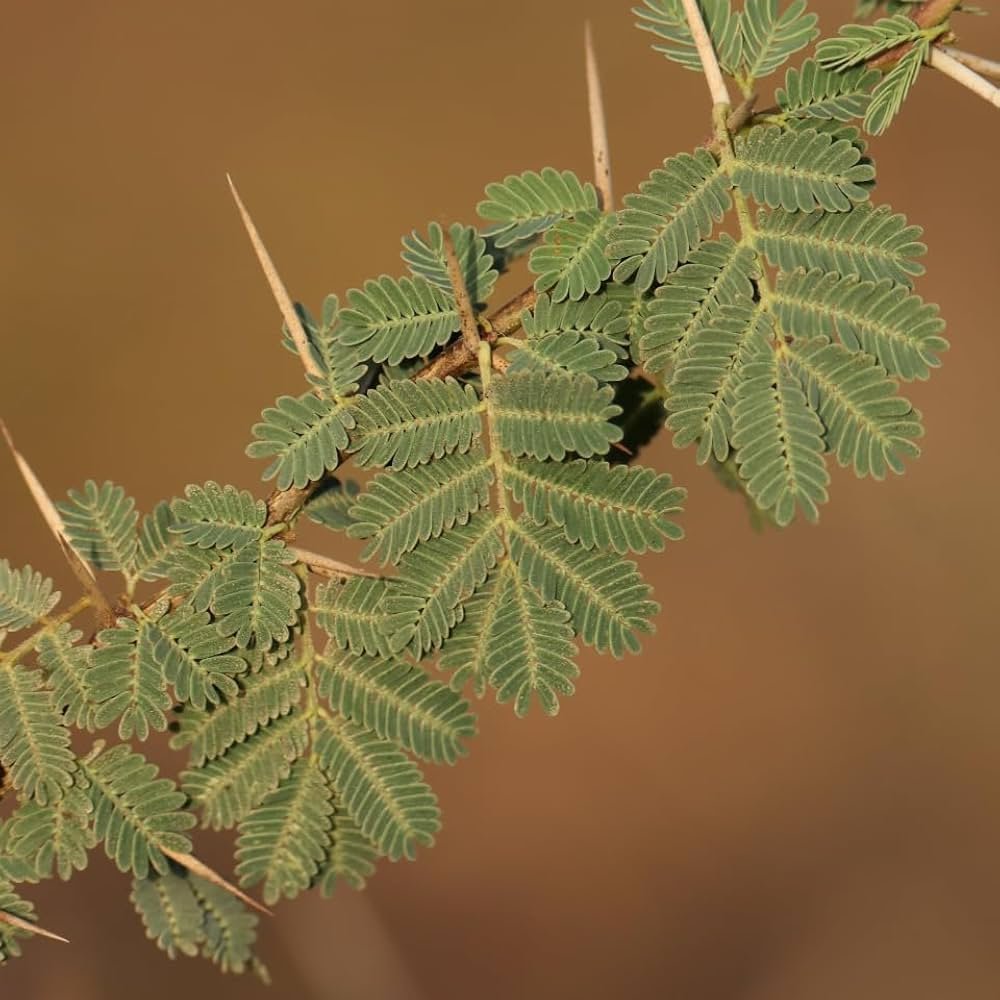
Acacia nilotica, currently accepted botanically as Vachellia nilotica, is a woody shrub or tree belonging to the legume family Fabaceae. It is associated with dry tropical and subtropical environments and is recognised by its thorny branches, finely divided compound leaves, yellow flower heads and characteristic pods.
The name Acacia nilotica is still widely used in horticultural, nursery, commercial and general online searches. Therefore, both Acacia nilotica and Vachellia nilotica are useful terms when identifying this plant.
The botanical name is particularly important when purchasing plants because common names such as Babool, Babul and Karuvelam can vary between regions.
Indian Babool Plant – Common and Regional Names
The plant is known by several common and regional names throughout India.
Some commonly encountered names include:
- Indian Babool
- Babool
- Babul
- Kikar
- Black Babool
- Tooth Tree
- Indian Gum Arabic Tree
- Karuvelam
- Karuvelan
- Babbula
- Babula
- Barburah
Tamil: கருவேலம் / Karuvelam
Hindi: बबूल / Babool, कीकर / Kikar
Sanskrit: बब्बुला / Babbula, बबुला / Babula, बर्बुर / Barburah
Because regional plant names may vary, the scientific name Vachellia nilotica is the most reliable way to identify the species.
Why Choose an Acacia nilotica Live Plant?
An Acacia nilotica live plant can be an interesting addition to collections focused on Indian medicinal, herbal, native and traditionally important plant species.
Distinctive Botanical Identity
The plant has a recognisable combination of woody branches, compound foliage, thorns, yellow flowers and seed pods.
Suitable for Outdoor Growing
Babool is associated with warm and relatively dry environments and is better suited to an outdoor location with good sunlight and adequate growing space.
Indian Botanical Significance
Vachellia nilotica has a long history of recognition and traditional use across parts of the Indian subcontinent.
Suitable for Plant Collections
It can be an interesting choice for botanical enthusiasts, traditional plant collectors and gardeners interested in Indian tree species.
Natural Ornamental Character
The combination of green compound foliage, branching structure, thorns and yellow flower heads gives the plant a distinctive natural appearance.
Acacia nilotica Plant Appearance
One of the easiest ways to recognise an Acacia nilotica / Vachellia nilotica plant is by its combination of foliage, branches, flowers and pods.
The plant develops a woody branching structure and may grow as a shrub or tree depending on environmental conditions and growth form.
It is associated with thorny branches, finely divided compound leaves and yellow rounded flower heads. Mature plants can also produce characteristic seed pods.
These features make the Babool tree an interesting species for people who enjoy observing Indian trees and building botanical plant collections.
How to Grow Acacia nilotica Live Plant
Growing an Acacia nilotica live plant successfully begins with selecting a suitable outdoor location.
Choose a Sunny Location
Keep the plant in a bright outdoor location receiving good natural sunlight. A sunny position is generally suitable for this species because it is associated with warm and relatively dry environments.
Avoid keeping the plant permanently in deep shade.
Use Well-Drained Soil
Plant the Babool tree in soil that allows excess water to drain effectively.
Avoid locations where water remains stagnant around the roots for long periods.
Watering Requirements
Water the young plant regularly while it is becoming established.
The exact frequency depends on soil, temperature, rainfall, humidity, container size and local growing conditions.
Avoid keeping the soil continuously waterlogged.
Give the Plant Enough Space
Vachellia nilotica is a woody shrub or tree, so select a planting location that provides enough room for future growth.
Because the plant can develop thorns, avoid placing it directly beside narrow walkways, entrances or high-traffic areas.
Protect Young Plants
Young plants can require protection from grazing animals and accidental physical damage. A simple protective barrier can be useful when establishing the plant in an open garden or landscape.
Best Place to Plant Babool
The best location for an Indian Babool plant is generally an open outdoor area with good sunlight, suitable drainage and enough room for future development.
Potential locations include:
- Large home gardens
- Botanical collections
- Farm landscapes
- Agroforestry areas
- Outdoor gardens
- Native plant collections
- Educational plant collections
- Large landscape spaces
Because Babool can develop thorny branches, select the planting position carefully.
Acacia nilotica Soil Requirements
Vachellia nilotica can occur in a variety of soil conditions depending on its environment.
For a nursery-grown live plant, the practical priorities are:
- Good drainage
- Suitable soil structure
- Adequate root space
- Appropriate moisture
- Sufficient organic matter
Avoid heavily compacted soil and locations where water remains around the root zone for extended periods.
Acacia nilotica Watering Guide
Young Acacia nilotica live plants require more attention during establishment.
Follow these basic steps:
- Check the soil before watering.
- Water when the growing medium begins to dry.
- Water thoroughly rather than lightly wetting only the surface.
- Allow excess water to drain away.
- Reduce unnecessary watering during prolonged rainfall.
- Adjust watering according to local temperature and weather.
There is no universal daily watering schedule for every plant because soil, rainfall, temperature, container size and sunlight can significantly change the plant’s water requirements.
Acacia nilotica Sunlight Requirements
An Indian Babool plant is an outdoor plant that benefits from strong natural light.
Choose a location with good sunlight and avoid keeping the plant permanently indoors.
If the plant has previously been grown under protected nursery conditions, gradually acclimatise it to stronger outdoor sunlight.
Is Acacia nilotica a Medicinal Plant?
Vachellia nilotica has a documented history of traditional and medicinal use.
Different parts of the plant have been associated with traditional practices, and scientific research has investigated its phytochemical composition.
However, the live plant sold by MedicinalLive should not be presented as a treatment or cure for a medical condition.
Traditional plant use and modern medical treatment are different subjects. Customers should not consume, prepare or use plant parts medicinally without appropriate guidance from a qualified healthcare professional.
Traditional Uses of Babool
Babool has a long history of traditional use in parts of India and other regions where the species occurs.
The plant has traditionally been associated with areas including oral care, gum care and tooth-related preparations, which is reflected in the common name Tooth Tree.
Different parts of the plant, including bark, leaves, flowers, pods and gum, have been discussed in traditional and scientific literature.
These traditional uses should not be interpreted as a medical claim that the live plant can cure gum disease or other health conditions.
Acacia nilotica for Indian Gardens
For Indian gardeners, the Indian Babool plant can be considered when sufficient outdoor space and appropriate growing conditions are available.
Before planting, consider:
- Available sunlight
- Soil drainage
- Long-term space
- Local rainfall
- Protection from grazing animals
- Distance from pathways
- Thorn management
- Local growing conditions
Because Babool can become a woody and thorny plant, it should be considered as a long-term outdoor plant rather than a small indoor decorative plant.
Acacia nilotica Live Plant for Plant Collectors
Plant collectors often look for species with distinctive botanical characteristics.
The Acacia nilotica live plant offers:
- Recognised botanical identity
- Indian regional significance
- Compound foliage
- Thorny branches
- Yellow flower heads
- Characteristic pods
- Woody growth
- Traditional importance
This makes Babool an interesting addition to a collection of Indian medicinal, herbal, native and traditionally significant plants.
You can also explore MedicinalLive’s Medicinal Plants and Herbal Plants collections for more live plant varieties.
Is Acacia nilotica the Same as Vachellia nilotica?
Yes. Acacia nilotica is a widely used scientific synonym for the currently accepted botanical name Vachellia nilotica.
You may therefore see the same plant listed online under both names.
For customers searching for an Acacia nilotica live plant, retaining both terms helps connect the traditional commercial search name with the currently accepted botanical name.
Can Acacia nilotica Be Grown in a Pot?
A young Acacia nilotica live plant can initially be maintained in a suitable container.
Long-term container cultivation requires attention to:
- Container size
- Root development
- Drainage
- Watering
- Nutrition
- Available sunlight
- Pruning
- Future plant size
As the plant develops, it may require a larger container or an appropriate outdoor planting location.
Acacia nilotica Plant Care After Delivery
When your Acacia nilotica live plant arrives, carefully remove the packaging and check the plant and growing medium.
If the plant has travelled through different environmental conditions, allow it to acclimatise gradually.
After receiving the plant:
- Carefully remove the packaging.
- Check the plant and soil condition.
- Water if the growing medium is dry.
- Keep it in an appropriate bright location.
- Gradually introduce stronger sunlight if necessary.
- Avoid unnecessary immediate repotting.
- Monitor the plant for new growth.
- Continue regular care according to your local climate.
Minor changes in leaf density or appearance can naturally occur during transportation and acclimatisation.
Medicinal Uses
Traditional uses associated with Babool include:
- Tooth-care preparations
- Traditional gum-care practices
- Traditional oral-care applications
- Traditional astringent preparations
Acacia nilotica has a documented history of traditional use, and different plant parts have been investigated for their phytochemical properties.
Important: This information is provided for botanical and traditional-reference purposes only. It is not medical advice, and the plant should not be used to self-treat gum disease, tooth problems or other medical conditions.
Botanical References
For additional botanical information and species identification, refer to these specialist resources:
Flowers of India – Babool:
View botanical information
India Flora Online – Acacia nilotica:
View botanical information
eFlora of India – Vachellia nilotica:
View botanical information
These resources can provide additional information about botanical identity, regional names, morphology, distribution and identification.
Video Link
Watch the Acacia nilotica live plant video
Happy Customers
See customer experiences, plant photographs and feedback to learn more about MedicinalLive live plant orders.
Packing Video
Watch the live plant packing process to see how MedicinalLive prepares plants for transportation.
Courier Services
MedicinalLive uses available courier services for live plant delivery, including:
- Shree Maruti
- India Speed Post
- ST Couriers
- Franchise Express
- Professional Couriers
Courier availability may vary depending on the delivery location and service availability.
Buy Acacia nilotica Live Plant Online in India
Looking to buy Acacia nilotica live plant online in India?
MedicinalLive offers this traditionally important Babool, Babul, Kikar and Karuvelam live plant for suitable outdoor gardens, botanical collections, farms, landscapes and plant enthusiasts.
Before ordering, make sure you have an appropriate outdoor location with sufficient sunlight, good drainage and enough space for the plant’s future development.
Explore more live plants through the MedicinalLive plant collection.
Frequently Asked Questions
What is the botanical name of Babool?
The currently accepted botanical name is Vachellia nilotica. Acacia nilotica is a widely used synonym.
What is Acacia nilotica called in Tamil?
It is commonly associated with the Tamil name Karuvelam (கருவேலம்).
Is Acacia nilotica a tree?
Yes. Vachellia nilotica can occur as a woody shrub or tree depending on its growth form and environment.
Does Babool need full sunlight?
Babool is suited to outdoor growing conditions and benefits from good natural sunlight.
How often should Acacia nilotica be watered?
Water according to soil moisture, weather, rainfall and growing conditions. Young plants generally require more regular attention while becoming established.
Can Babool be grown in a pot?
A young plant can be grown in a suitable container, but long-term growth requires adequate root space and consideration of its eventual woody growth.
Does Babool have thorns?
Yes. Thorny branches are a characteristic feature of Vachellia nilotica.
Is Acacia nilotica a medicinal plant?
It has a documented history of traditional medicinal use. However, traditional use does not mean that the live plant should be used as a medical treatment or cure.
Final Product Summary
Acacia nilotica live plant, currently accepted botanically as Vachellia nilotica, is a distinctive Indian Babool tree known by names including Babool, Babul, Kikar, Karuvelam, Babbula, Babula, Barburah and Tooth Tree.
With its compound foliage, thorny branches, yellow flower heads and woody growth habit, it can be an interesting choice for suitable outdoor gardens, botanical collections, farms, landscapes and plant enthusiasts.
If you are looking to buy Acacia nilotica live plant online in India, MedicinalLive provides this botanical species as part of its collection of medicinal, herbal, native and traditionally important live plants.
Choose a suitable sunny outdoor location, provide well-drained soil and allow sufficient room for future growth.
Plant Care
Packaging & Delivery
Why MedicinalLive?
Reviews (0)
You must be logged in to post a review.
Reviews
Clear filtersThere are no reviews yet.